Traction Alopecia in South Africa: How Braids, Weaves and Relaxers Cause Hair Loss
Walk into any salon in Johannesburg, Durban or Cape Town on a Saturday morning and you will see the same styles going in: tight cornrows, knotless braids, sew-in weaves and freshly relaxed roots. These looks carry real cultural weight, and they are part of how many South African women present themselves at work, at church and at family gatherings. What often goes unspoken is the toll that repeated tension and chemical processing take on the hairline over time. Traction alopecia has become one of the most common forms of hair loss seen in Black women across the country, and it almost always begins long before anyone notices a visible gap in the front.
The frustrating part is that this condition is preventable in its early stages and treatable in many of its later ones. It does not arrive overnight. It builds over years of small decisions about how tightly a style is fitted, how long it is worn, and how quickly the next set goes in after the last one comes out. Understanding what happens at the level of the follicle makes it far easier to spot the warning signs early, adjust styling habits in time, and recognise the point at which professional hair loss treatment becomes the sensible next step rather than a last resort.
What Traction Alopecia Actually Does to the Follicle
Every hair on your head sits in a follicle anchored into the scalp by a small network of tissue, blood vessels and muscle. That anchor is strong, but it was never built to hold a constant outward pull for eight or twelve hours a day, week after week. When a style drags the hair away from the scalp, the follicle is stretched sideways in its socket. Blood flow to the root is reduced, the growth cycle is disrupted, and hairs begin shedding earlier than they should. In the beginning this shedding is reversible, because the follicle itself is bruised rather than destroyed.
The turning point comes when tension continues for long enough that the body gives up on repairing the follicle and lays down scar tissue instead. Once that happens, the condition becomes scarring alopecia, and no cream, oil or supplement will bring the hair back, because there is no longer a living follicle to stimulate. This is why timing matters so much. Two women with identical styling habits can end up with completely different outcomes, purely because one acted at the first sign of thinning and the other waited three years hoping it would sort itself out.
Why Protective Styles Are Not Always Protective
Braids, twists and weaves earned the label “protective” for good reason. They shield fragile strands from daily combing, heat styling and weather, and they let the hair rest from constant manipulation. The problem is that the protection applies to the hair shaft, not to the root. A style can leave your ends in beautiful condition while quietly damaging the follicles holding everything in place. The two are separate systems, and looking after one says nothing about the health of the other.
What turns a protective style into a damaging one is tension, weight and duration. A loosely fitted braid worn for four weeks does very little harm. The same braid installed with the stylist pulling hard enough to lift the skin, worn for ten weeks, then immediately replaced with another set, creates a cycle the scalp never recovers from. Many South African women have worn styles back to back since childhood, which means the follicles along the front hairline have been under load for two decades without a genuine break.
Braids, Cornrows and the Tension Line Along the Hairline
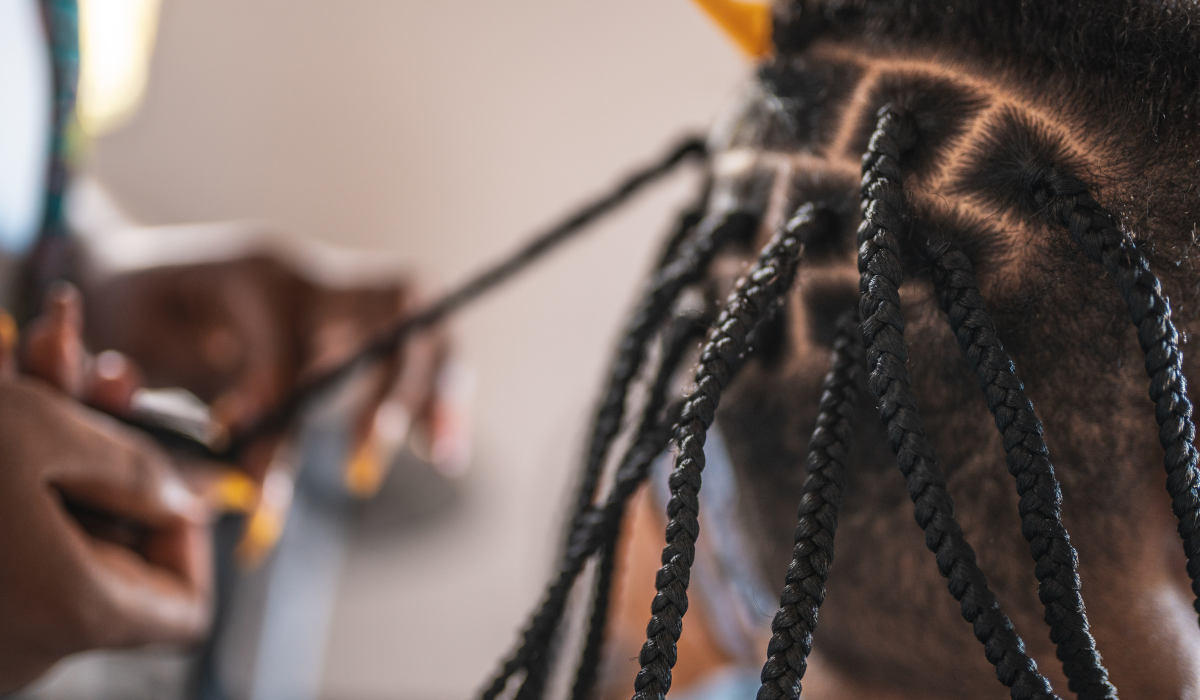
The classic pattern of traction alopecia from braids shows up as a receding band along the frontal and temporal hairline, often with a thin fringe of surviving baby hairs left in front of the bald area. That fringe is a useful diagnostic clue, because pattern hair loss does not usually leave it behind. The temples go first because the hairs there are naturally finer and the follicles shallower, so they surrender to pulling before the thicker hair further back does.
Cornrows and micro braids create the most concentrated force because they gather a large section of hair into a single anchor point. If your scalp is tender after a fitting, if you see small white bumps or pustules along the parting, or if you struggle to sleep on your side for the first few nights, the style is too tight. Those symptoms are not proof of a good install, despite what popular wisdom suggests. They are inflammation, and inflammation repeated often enough is exactly what triggers scarring. If your hairline has already started retreating, a proper assessment for hair loss treatment in South Africa will tell you how much living tissue remains.
Weaves, Wigs and the Weight of Bonded Extensions
Sew-in weaves distribute their load across the cornrow base underneath, which sounds safer than it is. The base itself carries the full weight of the added hair, and a full head of human hair extensions can add several hundred grams pulling downward for weeks on end. Glue-in and bonded extensions bring a second problem, because the adhesive grips the shaft near the root and removal often takes the natural hair with it. Repeated over a year or two, the loss compounds faster than most people realise.
Lace front wigs have their own risk profile. Daily application of strong adhesive along the hairline, followed by removal that tugs at the same few centimetres of skin, produces irritation and follicle trauma in precisely the area that is hardest to disguise later. Wig caps and combs that grip too firmly do the same thing from the sides. A wig can be a genuinely good option while the scalp recovers, but only if it sits on a soft cap without adhesive and without clips digging into an already stressed hairline.
Chemical Relaxers and the Damage Beneath the Scalp
Relaxers work by breaking the disulphide bonds that give textured hair its curl pattern, permanently restructuring the shaft. Done correctly, on healthy scalp, with the right timing and thorough neutralising, the damage stays limited to the hair itself. Done on scalp that is scratched, freshly washed or already inflamed, the chemical burns living tissue. Anyone who has felt that sharp sting during a relaxer has experienced a chemical burn, and burns heal by scarring.
The compounding effect is what does the real harm. A relaxed head of hair is weaker and more porous than natural hair, so it snaps more easily under the tension of braiding or weaving. Many women then relax, braid, take down, relax again and reinstall, stacking chemical weakness on top of mechanical pull. Overlapping relaxer onto previously processed lengths, or relaxing more often than every ten to twelve weeks, accelerates the whole process. If chemical relaxers are part of your routine, spacing them out and keeping the product strictly on new growth makes a measurable difference.
Early Warning Signs Most People Miss
The first sign is rarely baldness. It is usually a subtle change in texture at the temples, where the hairs come back finer, shorter and more sparse after each style. People often blame stress or the seasons and carry on. Tenderness that lasts more than a day after a fitting, small itchy bumps along partings, and short broken hairs scattered on the pillow are all early signals that the follicles are protesting.
Another sign worth watching is a hairline that no longer sits where it used to in photographs from three or four years ago. Gradual recession is almost impossible to notice in a mirror you look into every morning, but obvious when you compare images taken years apart. Keeping a simple photo record of your hairline every six months, taken in the same light and from the same angle, gives you objective evidence rather than a guess.
How Doctors Diagnose Traction Alopecia
A proper diagnosis begins with history rather than equipment. A clinician will ask what styles you wear, how tightly they are fitted, how long you keep them in, when you first noticed a change, and whether relaxers or colour form part of your routine. This matters because traction alopecia can look similar to central centrifugal cicatricial alopecia, frontal fibrosing alopecia or female pattern loss, and the treatment paths differ considerably.
Examination usually involves trichoscopy, a magnified look at the scalp surface that reveals whether follicular openings are still visible or have been replaced by smooth, shiny skin. Visible openings mean living follicles and a realistic chance of regrowth with medical treatment. Smooth scalp with no openings points to scarring, which changes the conversation towards surgical restoration. In uncertain cases a small scalp biopsy settles the question definitively.
Non-Surgical Treatments That Work in the Early Stages
When follicles are still alive, the first intervention is removing the cause. No treatment succeeds while tension continues, so the styling has to change before anything else is attempted. From there, topical minoxidil is the most widely used option, applied to the affected margins to extend the growth phase and thicken miniaturised hairs. Anti-inflammatory treatment, usually a topical or injected corticosteroid, calms the follicle irritation that drives the damage forward.
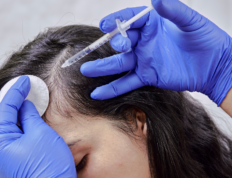
Platelet-rich plasma has become a popular addition because it uses growth factors drawn from your own blood to stimulate follicles that are struggling rather than dead. A course of PRP hair treatment typically runs over several monthly sessions with maintenance afterwards, and results depend heavily on how much viable tissue remains. Nutritional gaps matter too, particularly iron and vitamin D, which are common deficiencies among South African women and both linked to increased shedding.
Hair Transplant Surgery for Scarred Hairlines
Where scarring has already taken hold, restoring the hairline means moving follicles from an area that has never been under tension, usually the back and sides of the scalp, into the affected zone. Both follicular unit extraction and strip harvesting are used, and the choice depends on the density of your donor area, the size of the region being treated and how you prefer to wear your hair afterwards. Textured African hair has a curved follicle beneath the skin, which demands a surgeon experienced in that anatomy to avoid high transection rates during extraction.
Surgery is not a licence to return to old habits. Transplanted follicles keep the characteristics of their donor site, so they resist the hormonal causes of pattern loss, but they have no special immunity to being pulled out by a tight braid. Any credible clinic will insist that the underlying tension is resolved and the scalp stable for several months before operating. A consultation about hair transplant surgery should include an honest assessment of donor supply and a realistic density expectation, not a promise of the hairline you had at eighteen.
Styling Habits That Protect the Hairline Long Term
The single most useful change is giving the scalp genuine rest between styles. Two to four weeks of loose, low-manipulation wear after every protective style lets inflamed follicles settle before the next load goes on. Keeping braids in for no more than six to eight weeks, choosing larger sections over micro braids, and asking your stylist to leave the perimeter hairline out of the pattern entirely all reduce the force applied where the damage shows first.
Speaking up during the fitting is the other half of it. If a style hurts while it is being installed, it is too tight, and asking for it to be loosened is a reasonable request rather than a difficult one. Take down styles gently with plenty of conditioner and time. Avoid sleeping in tight ponytails or hard buns, use a satin pillowcase or scarf, and let go of the idea that a sleek edge requires gel plus a brush plus tension. Baby hairs are structural, not decorative.
Speak to Hair Clinic International About Your Hairline
Traction alopecia rewards early action and punishes delay, which makes an assessment worth doing at the first sign of thinning rather than after years of hiding the front with a wig. A clinical examination will tell you whether your follicles are dormant or gone, and that single answer determines whether you are looking at a course of medical treatment or a surgical plan.
Hair Clinic International has been treating hair loss in South Africa for years, with clinicians who understand textured hair and the specific patterns that braids, weaves and relaxers produce. Whether your hairline needs medical support, a PRP course or a transplant, the starting point is the same: an honest look at what remains and a straight answer about what can realistically be restored. Book a consultation and find out where you actually stand.