Hair loss is one of the most common concerns affecting both men and women across South Africa, and for many people it carries a weight that goes far beyond aesthetics. Whether it begins gradually — a wider parting, more hair on the pillow, a slowly receding hairline — or seems to accelerate suddenly after illness or stress, the experience of watching your hair thin can affect confidence, self-image, and quality of life in profound ways. The good news is that advances in regenerative medicine have opened the door to treatments that work with your body’s own biology rather than against it. Among the most widely used and well-supported of these is PRP hair treatment, a procedure that draws on the natural healing power already present in your blood to stimulate dormant follicles and support the growth of thicker, healthier hair.
What Platelet-Rich Plasma Actually Is
To understand why PRP works, it helps to understand what it is. Platelet-rich plasma is a concentrated preparation derived from your own blood. Blood is made up of red cells, white cells, plasma, and platelets. Platelets are small, disc-shaped cells whose primary job is to respond to injury — they rush to a wound site, clump together to stop bleeding, and release a range of signalling proteins called growth factors that instruct surrounding tissue to repair and regenerate. In a standard blood sample, platelets make up a relatively small fraction of the total volume. PRP therapy involves spinning a blood sample in a centrifuge to separate and concentrate those platelets, producing a plasma solution that contains far higher concentrations of these growth factors than you would find circulating naturally.
The resulting preparation is not a synthetic drug or a foreign substance. It is entirely derived from your own body, which is one of the reasons it carries a low risk of allergic reaction or rejection. When injected into targeted areas of the scalp, the concentrated growth factors interact directly with the tissue around hair follicles, triggering cellular activity that supports follicle health, increases blood supply to the scalp, and stimulates the transition of resting follicles back into an active growth phase. The science behind this is grounded in decades of regenerative medicine research, and PRP has been used successfully in orthopaedics, wound healing, and dental surgery long before it became a mainstay of hair restoration.
How Hair Loss Actually Happens
Understanding the mechanism of hair loss makes it easier to appreciate why PRP is an appropriate intervention. Hair does not grow continuously — it cycles through phases. The anagen phase is the active growth phase, lasting anywhere from two to seven years depending on genetics. This is followed by the catagen phase, a short transitional period, and then the telogen phase, during which the follicle rests before the cycle begins again. In a healthy scalp, the vast majority of follicles are in the anagen phase at any given time, which is why shedding a small number of hairs daily is entirely normal.
In androgenetic alopecia — the most common form of hair loss in both men and women — the hormone dihydrotestosterone (DHT) binds to receptors in genetically susceptible follicles and gradually miniaturises them. Over successive cycles, the anagen phase shortens and the follicles produce progressively finer, shorter hairs until they eventually stop producing visible hair altogether. What is important to understand is that in many cases, the follicles themselves are not dead — they are dormant and starved of the biological signals they need to function. This is the window in which hair loss treatment using PRP can make a meaningful difference, because the growth factors it delivers are precisely the kind of signals those follicles need.
Other forms of hair loss — including telogen effluvium triggered by stress, illness, nutritional deficiency, or hormonal shifts — also involve follicles that are technically capable of recovery but have been pushed prematurely into the resting phase. In these cases, PRP can help accelerate the return to normal cycling and support overall scalp health during the recovery period.
What the PRP Procedure Involves
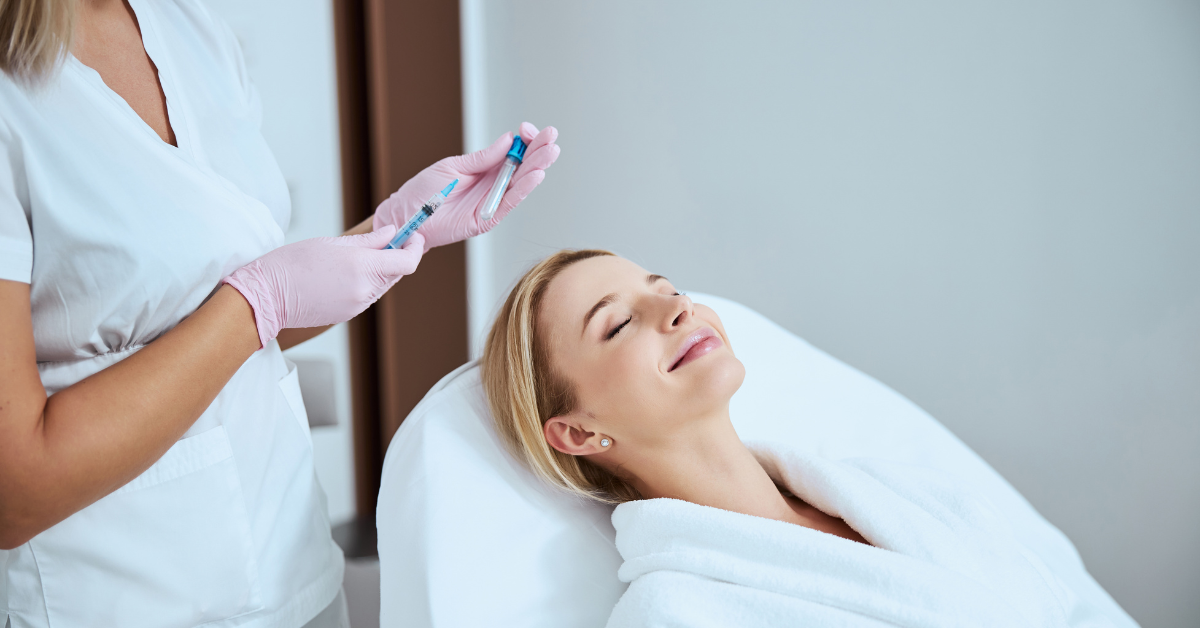
The procedure itself is straightforward and is performed entirely in-clinic with no requirement for general anaesthesia or surgical recovery time. A small amount of blood — typically between 20 and 60 millilitres — is drawn from your arm, exactly as it would be in a routine blood test. This sample is then placed in a centrifuge and spun at carefully calibrated speeds to separate the plasma and concentrate the platelet content. The process takes approximately 10 to 15 minutes, and the resulting PRP is prepared for immediate use.
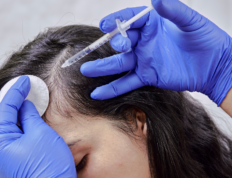
The concentrated plasma is then injected into the scalp at intervals across the areas of concern, using very fine needles. A topical numbing agent is applied beforehand to minimise discomfort, and most patients describe the sensation as mild pressure rather than pain. The entire appointment typically takes between 60 and 90 minutes from start to finish. Because the preparation is autologous — meaning it comes from your own body — there is no waiting period for compatibility testing and no recovery time required afterwards. Most patients return to their normal activities the same day, making this a practical choice for those who cannot accommodate surgical downtime.
What Results Look Like and When to Expect Them
One of the most important things to set realistic expectations about is the timeline for hair regrowth following PRP treatment. Hair biology moves slowly, and PRP is not a rapid-acting fix. The growth factors injected during a session begin stimulating cellular activity relatively quickly, but because they are working on follicles that may have been dormant for months or years, the visible results take time to manifest.
Most patients notice a reduction in shedding within the first four to eight weeks following initial treatment. This is often the first sign that the treatment is working — the hair that is present stabilises before new growth becomes visible. New hair growth typically begins to appear between three and six months after beginning a treatment course, and the quality and density of results continues to improve for up to a year after treatment is completed. Individual response varies based on factors including the degree and duration of hair loss, age, overall health, and the specific pattern of alopecia. Those who begin treatment earlier in the progression of hair loss tend to see more pronounced results, because there are more viable follicles still present to respond to the treatment.
The Recommended Treatment Schedule
A single session of PRP does not typically produce lasting results on its own. The standard protocol recommended by experienced clinicians involves an initial course of three to four sessions spaced approximately four to six weeks apart. This initial series is designed to flood the scalp with growth factors repeatedly over a concentrated period, building momentum in the follicle stimulation process. After the initial course is complete, patients generally move to maintenance sessions every three to six months to sustain the results over time.
This phased approach reflects the way hair follicles respond to growth signals — they need repeated stimulation to shift their behaviour over the long term, and the gains achieved during the initial course can diminish without periodic reinforcement. The maintenance schedule is typically lighter and less frequent than the initial course, making it manageable to incorporate into an ongoing wellness routine. At Hair Clinic International, treatment plans are developed individually based on the patient’s hair loss pattern, history, and goals, rather than applying a one-size-fits-all protocol.
PRP as Part of a Broader Treatment Plan
PRP is highly effective as a standalone scalp treatment, but it is often most powerful when used in combination with complementary therapies. Hair Clinic International offers a comprehensive range of treatments that can be layered with PRP to address different aspects of hair loss simultaneously. Laser hair regrowth therapy, for example, uses low-level laser light to increase cellular energy production in follicle cells, supporting the growth-stimulating effects of PRP from a different biological angle. Mesotherapy involves microinjections of a customised blend of vitamins, minerals, and amino acids directly into the scalp, addressing nutritional deficiencies at the follicle level.
For patients whose hair loss has a hormonal component — which is particularly common in women experiencing postpartum shedding, perimenopause, or thyroid-related loss — hormone therapy may be integrated into the treatment plan alongside PRP. GF Complex Plus, another advanced treatment offered at the clinic, delivers additional growth factor support through a different delivery mechanism. The availability of these complementary options means that a non-surgical hair treatment plan can be genuinely tailored to the underlying cause of each individual’s hair loss, rather than simply applying a generalised approach.
Who Is a Good Candidate for PRP
PRP is suitable for a broad range of patients, but like any treatment, it works best in certain contexts and may not be the most appropriate first-line option in others. The ideal candidates are those in the early to mid stages of androgenetic alopecia — people who still have a meaningful number of active or dormant follicles for the growth factors to work with. If hair loss has progressed to the point where large areas of the scalp are completely smooth and follicles have been absent for many years, PRP is unlikely to restore hair in those regions, though it may still help slow further loss elsewhere.
PRP is also well-suited to patients experiencing diffuse thinning rather than complete pattern baldness — a presentation that is more common in women than in men. It is appropriate for patients who prefer to avoid surgical procedures, as well as for those who have already undergone a hair clinic South Africa surgical transplant and wish to support the health of both transplanted and native follicles during recovery. Patients with conditions that affect platelet function, those on blood thinners, or those with certain autoimmune conditions may not be appropriate candidates and should discuss their full medical history with a clinician before proceeding.
How PRP Compares to Other Non-Surgical Options
The landscape of hair loss treatment options has expanded significantly over the past decade, and PRP occupies a distinctive position within it. Unlike topical minoxidil or oral finasteride — the two most widely prescribed pharmaceutical options — PRP does not require daily compliance and does not carry the risk of side effects associated with long-term systemic medication. It also targets the follicle directly through localised injection rather than relying on a drug absorbed systemically.
Compared to carboxytherapy, which uses carbon dioxide injections to increase oxygen delivery and circulation in the scalp, PRP delivers a broader range of biological signals through its growth factor content. Both approaches address scalp health and follicle function, but through different mechanisms, which is why they are often used together rather than as alternatives. Against mesotherapy, PRP differs in that the active agents are entirely autologous — sourced from the patient’s own blood — whereas mesotherapy uses exogenous compounds. Neither approach is universally superior; the appropriate choice depends on the individual patient’s presentation, goals, and response to previous treatments. A thorough assessment at a reputable hair restoration clinic is the only reliable way to determine which combination is right for a given patient.
Safety, Regulation, and What to Look For in a Clinic
Because PRP uses your own blood and does not introduce foreign substances into the body, its safety profile is generally excellent. Side effects are typically minor and transient, including temporary redness, mild swelling, or tenderness at the injection sites for one to two days following treatment. Serious complications are rare when the procedure is performed by trained clinicians using sterile technique and calibrated centrifuge equipment.
That said, the quality of PRP preparation varies significantly depending on the centrifuge protocol used and the skill of the practitioner. Suboptimal centrifugation can produce a preparation with insufficient platelet concentration, reducing the effectiveness of the treatment. This is why it matters greatly where you choose to have the procedure done. Hair Clinic International is FDA cleared and ECM compliant, which provides assurance that their protocols, equipment, and standards meet internationally recognised benchmarks. When evaluating any clinic offering platelet-rich plasma treatment, it is worth asking about their centrifuge protocol, the qualifications of the practitioners performing the injections, and whether they conduct a proper diagnostic assessment before recommending treatment.
Managing Expectations and Long-Term Thinking
Perhaps the most important mindset shift for anyone considering PRP is moving away from thinking about it as a cure and towards thinking about it as a management strategy. Hair loss — particularly androgenetic alopecia — is a genetic, progressive condition. PRP does not alter your genetics or permanently switch off the hormonal processes driving follicle miniaturisation. What it does is provide repeated biological support that slows progression, strengthens existing thinning hair, and stimulates recovery in follicles that still have regenerative capacity.
For many patients, this is exactly what they need. Not a dramatic overnight transformation, but a meaningful, sustained improvement in hair density and coverage that makes a real difference to how they look and feel. The patients who achieve the best long-term outcomes are typically those who commit to the full initial course and maintain their results with periodic sessions, rather than treating PRP as a one-off intervention and expecting permanent results from a single session. Working with a clinic that provides ongoing monitoring and adjusts the treatment plan as needed is equally important — hair loss is dynamic, and an effective strategy should be too.
PRP hair regrowth treatment represents one of the most credible and well-supported options currently available for those dealing with thinning hair who want to avoid surgery or pharmaceuticals. Grounded in the body’s own regenerative biology, supported by a growing body of clinical evidence, and accessible at leading clinics like Hair Clinic International, it offers a genuine, scientifically coherent pathway to thicker, healthier hair. If you are noticing the early signs of hair loss or have been living with thinning hair for some time, a consultation with a qualified specialist is the right first step — because the earlier the intervention, the more options remain open to you.