PRP Therapy for Hair Loss: How It Works and What to Expect
PRP therapy for hair loss has become one of the most talked-about treatments in trichology over the past decade, and for good reason. It is minimally invasive, uses the patient’s own blood, and has a growing body of clinical evidence supporting its effectiveness for both male and female hair loss. If you have been researching your options and wondering whether PRP is right for you, this guide covers everything you need to know before booking your first session at Hair Clinic International.
What Is PRP Therapy?
Platelet-rich plasma (PRP) is a concentrated form of your own blood plasma that contains a high level of growth factors, proteins, and other bioactive substances that play a role in tissue repair and cell regeneration. PRP has been used in orthopaedic surgery, wound healing, and dentistry for decades, and its application in hair loss treatment is a natural extension of those established uses.
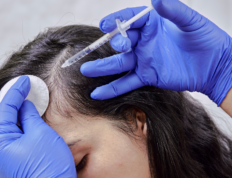
The principle behind PRP therapy is straightforward: by injecting a highly concentrated solution of growth factors directly into the scalp, you can stimulate weakened or dormant hair follicles to enter a more active growth phase. The treatment does not create new follicles, but it can revive follicles that have become miniaturised due to conditions such as androgenetic alopecia and improve the quality and density of the hair they produce.
How PRP Stimulates Hair Growth
Hair follicles cycle through phases of growth (anagen), regression (catagen), and rest (telogen). In conditions like androgenetic alopecia, follicles spend increasingly shorter periods in the growth phase and produce progressively finer hair over time. Left untreated, this miniaturisation eventually leads to permanent loss of visible hair from affected follicles.
The growth factors concentrated in PRP, including platelet-derived growth factor (PDGF), vascular endothelial growth factor (VEGF), and transforming growth factor (TGF), work by signalling the cells around the hair follicle to proliferate and repair. VEGF in particular promotes the formation of new blood vessels around follicles, improving their nutrient supply. PDGF stimulates dermal papilla cells, which are the primary regulators of follicle cycling. The combined effect is a follicle that is better nourished, more active, and capable of producing thicker, longer hair.
Who Is a Good Candidate for PRP Hair Treatment?
PRP therapy for hair loss produces the best results in patients who still have functioning follicles in the affected areas. This makes early to mid-stage hair loss the ideal window for treatment. Follicles that have been dormant for many years and scalp areas that are completely smooth without any fine vellus hairs are unlikely to respond well, because there is no follicular activity for the growth factors to build on.
Good candidates typically include men and women with androgenetic alopecia in the early to moderate stages, patients experiencing increased shedding due to telogen effluvium, and individuals looking to maintain and improve results following a hair transplant. People with active scalp infections, blood disorders, or those on anticoagulant medication are generally not suitable candidates, and a specialist assessment is the only reliable way to determine whether PRP is appropriate for your specific situation.
The PRP Procedure: What Happens During a Session?
The procedure begins with a simple blood draw, usually from the arm, comparable to a routine blood test. The blood is then placed in a centrifuge and spun at high speed to separate the components by density. The resulting layers are the red blood cell fraction at the bottom, the platelet-poor plasma at the top, and the platelet-rich plasma layer in the middle. This middle layer is carefully extracted for use.
Before the scalp injections begin, a topical anaesthetic cream is applied to the treatment area and left for approximately 20 to 30 minutes to reduce discomfort. The PRP is then injected at multiple points across the thinning areas of the scalp using a fine needle, at a depth and spacing calculated to distribute the growth factors evenly through the target zone. The injection phase typically takes 15 to 20 minutes. The entire appointment, from blood draw to completion, usually takes around 60 to 75 minutes.
How Many Sessions Do You Need?
A standard PRP hair treatment course consists of three to four sessions spaced four to six weeks apart. This initial course is designed to build up the growth factor response in the scalp over time, as a single session produces a weaker and shorter-lived effect than a structured course. Most patients begin to notice changes in hair texture, reduced shedding, and early density improvements toward the end of the initial course.
Following the initial course, maintenance sessions are recommended every three to six months to sustain the results. Hair loss conditions like androgenetic alopecia are ongoing, so the follicle-stimulating effect of PRP needs to be reinforced periodically. The exact schedule depends on the rate of your hair loss, your response to treatment, and whether you are combining PRP with other therapies. Your specialist at Hair Clinic International will recommend a maintenance plan based on your specific case.
What Results Can You Realistically Expect?
PRP is not a cure for hair loss, and setting realistic expectations before starting treatment is important. What most patients experience is a meaningful slowing of hair loss, an improvement in the texture and calibre of existing hair, and a moderate increase in density over the treatment course. For patients in the early stages of androgenetic alopecia, these results can be quite visible. For those with more advanced loss, PRP is more likely to slow further deterioration than to produce dramatic regrowth.
Clinical studies on PRP for hair loss consistently show improvements in hair count, hair thickness, and patient-reported satisfaction, though results vary between individuals. The key factors influencing outcome include the stage of hair loss at the time of treatment, the patient’s platelet count and quality, and adherence to the recommended treatment schedule. Photographs taken at baseline and after each session are the most reliable way to track your progress objectively.
Combining PRP with Other Hair Loss Treatments
PRP works well as a standalone treatment, but it also performs particularly well when used alongside other therapies. Combining PRP with minoxidil, for example, addresses the condition from two angles: the topical treatment extends the growth phase hormonally while the PRP improves the follicle’s local environment. Low-level laser therapy (LLLT) is another complement to PRP, with both treatments supporting improved follicle metabolism.
For patients who have undergone hair transplant surgery, PRP injections in the post-operative period are increasingly used to accelerate healing and improve graft survival. The growth factors support the follicles as they re-establish their blood supply in the new location, which can shorten the recovery period and improve the density of the final result.
Are There Any Side Effects?
Because PRP uses your own blood, the risk of allergic reaction or rejection is essentially zero. The most common side effects are mild and localised to the injection sites: temporary redness, slight swelling, and tenderness in the scalp that typically resolves within 24 to 48 hours. Some patients experience a slight tightness or itching in the treated area for a day or two after the procedure.
More serious complications are rare when the procedure is performed by a trained specialist in a clinical setting. Infection risk is minimised by standard sterile technique. Scalp haematomas can occur if the injection depth or pressure is not carefully controlled, which is another reason to choose a reputable clinic with experienced practitioners for your PRP therapy.
How to Prepare for Your PRP Session
A few simple steps in the days before your appointment can help optimise your results. Staying well hydrated in the 24 hours before your session improves blood flow and makes the blood draw easier. Avoid non-steroidal anti-inflammatory drugs (NSAIDs) such as ibuprofen for at least a week before treatment, as these can inhibit platelet function and reduce the concentration of growth factors in your sample.
On the day of your appointment, arrive with a clean scalp, free of styling products. Eat a nutritious meal beforehand and avoid alcohol for at least 24 hours prior. After the procedure, avoid washing your hair for 24 hours and steer clear of intense exercise, steam rooms, or saunas for 48 hours to allow the PRP to remain in the scalp tissue without being diluted or washed away.
Booking Your PRP Consultation
If you are noticing increased shedding, a thinner ponytail, or a widening part, a consultation with a trichologist is the right starting point. PRP may be the appropriate treatment for your type of hair loss, or it may be recommended alongside other therapies depending on what the assessment reveals. Either way, understanding what is causing your hair loss and having a clear treatment plan is the most important first step.
At Hair Clinic International, our specialists assess your scalp thoroughly before recommending any treatment. If PRP is suitable for your case, we will outline exactly what to expect, how many sessions are likely to be needed, and what results are realistic for your stage of hair loss. Book a consultation and take the first step toward addressing your hair loss with a treatment that is backed by science and tailored to your biology.