How Much Does Hair Loss Treatment Cost in South Africa (And Will Medical Aid Cover It)?
Hair loss is one of those problems where the medical answer is fairly settled and the financial answer is anything but. Ask three clinics what it takes to stop a receding hairline and you may hear a few hundred rand a month from one, several thousand for a course of injections from another, and a six figure surgical quote from the third. All three can be correct at the same time, because they are describing different problems. The hair loss treatment cost you end up paying depends far less on the clinic’s postcode than on how far the loss has already progressed and what you want the outcome to look like.
The second question follows the first almost automatically. If the numbers are that large, will a medical aid scheme carry any part of them? South African schemes have a firm position here, and it catches most people off guard when they read the fine print for the first time. What follows is a practical breakdown of what each treatment tends to cost locally, which line items people forget to budget for, and the narrow set of circumstances where a claim has a genuine chance of being paid.
What Sets the Price of Hair Loss Treatment
Three variables move the price more than anything else: the cause of the loss, the stage it has reached, and the surface area involved. Androgenetic alopecia caught at a mild stage, where the hairline has softened but density is largely intact, is a medication problem. The same condition ten years later, with a bare crown and a receded frontal third, is a surgical problem, and surgery costs roughly twenty times what a year of tablets does. Nobody chooses which category they fall into, which is why an early assessment is worth more than any discount.
Diagnosis matters just as much. Male and female pattern loss, telogen effluvium after illness or childbirth, traction alopecia from tight styling, and autoimmune alopecia areata all look loosely similar to an untrained eye and respond to completely different interventions. Paying for a transplant when the underlying cause is an active autoimmune process is money set alight. A proper diagnosis, with blood work where indicated, is the cheapest step in the entire process and the one that protects every rand spent afterwards.
Then there is the question of maintenance. Some treatments are once off in the surgical sense but still require ongoing medication to protect the hair you did not transplant. Others are subscription style by nature, working only for as long as you keep using them. When comparing quotes between clinics, the honest comparison is not the headline figure but the total spend across three to five years, including everything you will still be buying in year four.
Consultation and Diagnosis: The First Line on Your Invoice
Most South African hair clinics charge somewhere between R500 and R1,500 for an initial consultation, and a number of them waive that fee entirely or credit it against treatment if you proceed. That appointment should include a scalp examination, often with trichoscopy, a donor area assessment, and a documented photographic baseline. If a clinic quotes you a price without examining your donor area under magnification, treat the quote as marketing rather than a medical plan.
Blood work is the line item people rarely anticipate. Thyroid function, ferritin, full blood count, vitamin D and hormonal panels commonly run between R800 and R2,500 depending on how many markers are requested and whether the pathology is done privately or through your scheme. This is one of the few parts of the process where a medical aid contribution is realistic, because pathology is billed against a legitimate diagnostic code rather than a cosmetic one. If you have day to day benefits or savings available, use them here.
Dermatologist referrals sit in a similar bracket. A specialist consultation typically ranges from R1,200 to R2,500, and where the referral is driven by a suspected medical condition rather than cosmetic concern, part of that may draw from your scheme’s savings account. Before you book a consultation, ask the practice which billing codes they use, because that single question determines whether your scheme sees the visit as dermatology or as aesthetics.
What Hair Loss Medication Costs Each Month
Oral finasteride at 1mg remains the most widely prescribed intervention for male pattern loss, and generic versions have brought the monthly cost down substantially. Expect roughly R200 to R450 a month depending on brand and pharmacy, with the branded original sitting at the upper end. Topical minoxidil at 5% generally lands between R250 and R550 for a month’s supply, and compounded topical formulations that combine minoxidil with other actives can push that towards R900.
Run the arithmetic across a year and a combined medication protocol sits somewhere near R6,000 to R12,000 annually. That is the number worth holding in your head when a surgical quote arrives, because medication is not an alternative to surgery so much as its companion. Transplanted follicles are resistant to the hormone that caused the original loss, but the native hair around them is not, and without ongoing treatment that surrounding hair keeps thinning while the graft stays put. The result looks worse over time, not better.
Women face a slightly different menu. Topical minoxidil at 2% or 5%, spironolactone where prescribed, oral contraceptives in specific hormonal presentations, and iron supplementation where ferritin is low all appear on treatment plans, with monthly costs spanning R150 to R700. The practical point holds across both groups: medication is the affordable tier, and its value is highest before there is anything visible to reconstruct.
PRP Therapy Pricing and Session Structure
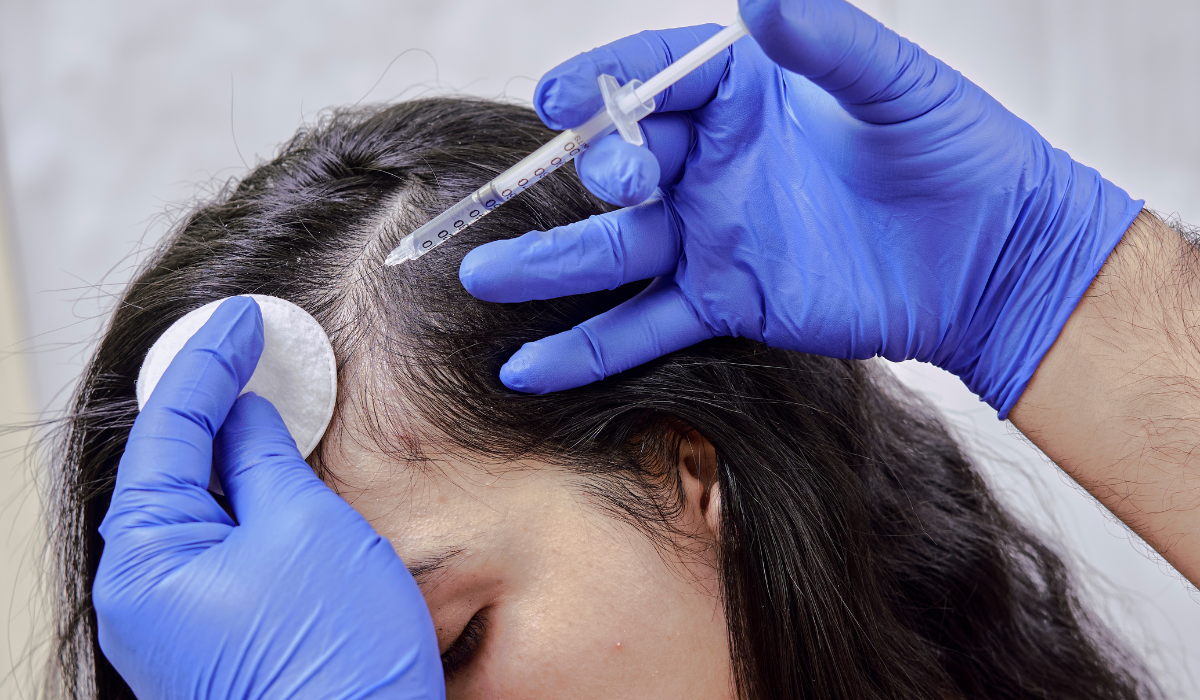
Platelet rich plasma sits between medication and surgery in both cost and effect. A single session in South Africa generally falls between R2,500 and R5,000, and no reputable clinic sells you one in isolation. The standard protocol runs three to four sessions spaced four to six weeks apart, which puts the initial course somewhere in the R8,000 to R18,000 band, followed by maintenance sessions every six to twelve months at the single session rate.
The wide price spread reflects real differences in what is being delivered. Double spin centrifugation, higher platelet concentrations, larger blood draws and the addition of growth factor complexes all cost the clinic more and get passed on. Some practices bundle microneedling into the same appointment. When a quote for PRP therapy looks unusually cheap, ask how many millilitres are drawn, how the plasma is separated, and how many injection points the scalp receives.
PRP works best on hair that is miniaturising rather than gone. On a scalp that has been smooth for a decade, it has nothing to work with, and any clinic promising otherwise is selling you a subscription rather than a result. Used at the right stage, though, it is often the intervention that delays or shrinks a future surgical bill, which makes its cost easier to justify.
Hair Transplant Costs and the Price Per Graft
South African clinics price surgery per graft, and the going rate typically sits between R25 and R60 per graft depending on technique, surgeon experience and how much of the work is done by hand. A modest frontal hairline restoration of 1,200 to 1,500 grafts therefore lands around R35,000 to R75,000. A larger case covering the hairline and crown, running 2,500 to 3,500 grafts, moves into the R70,000 to R180,000 range and may be split across two sessions.
Some practices quote a flat session fee rather than a per graft rate, which sounds simpler until you compare it properly. A flat R60,000 for “up to 2,000 grafts” is excellent value if you need 2,000 and poor value if you need 900. Ask for the estimated graft count in writing after the donor assessment, then divide. That single calculation makes competing quotes for a hair transplant genuinely comparable for the first time.
Beware the cross border comparison too. Turkish package pricing circulates widely and looks unbeatable until flights, accommodation, time off work and the near impossibility of local follow up are added. Revision surgery to correct poorly angled grafts or an over harvested donor area costs considerably more than doing it correctly once, and that correction happens at home regardless of where the original work was done.
FUE and FUT: How the Technique Changes the Total
Follicular unit extraction harvests individual follicular units directly from the donor area, leaving scattered dot scars rather than a line. It is more labour intensive per graft, takes longer, and generally carries a premium of roughly R10 to R20 per graft over the older strip method. For most patients with short hair or a preference for shaved styles, that premium buys the freedom to wear their hair as they like afterwards.
Follicular unit transplantation, the strip technique, removes a band of scalp from the donor area and dissects the grafts under microscopes. It is faster, often yields more grafts in a single sitting, and costs less per unit, but leaves a linear scar that needs hair length to conceal. For very large cases where maximum yield in one session matters, it remains a defensible clinical choice rather than a dated one.
There are also premium variants such as sapphire blade implantation and direct hair implantation using specialised pens, which typically add between fifteen and thirty percent to the base price. Whether that uplift is worth paying depends more on the surgeon’s skill with the tool than on the tool itself, so ask to see the practice’s own before and after photographs at your specific stage of loss.
Laser Therapy, Scalp Care and Supporting Treatments
Low level laser therapy devices, sold as caps, helmets or combs, retail in South Africa from roughly R6,000 for entry level units to R25,000 for medical grade caps with high diode counts. They are a once off purchase rather than a recurring cost, which makes them attractive on paper, though the evidence supports them as a supporting measure alongside medication rather than a standalone answer. In clinic laser sessions are also offered, usually between R400 and R900 per visit.
Mesotherapy and vitamin infusion protocols occupy a similar supporting role, priced around R1,500 to R3,000 per session. Medicated shampoos containing ketoconazole run R180 to R400 a bottle and last a month or two. None of these will regrow a bare scalp, but they contribute to the health of the follicles still fighting, and they are the least expensive part of most maintenance plans.
The trap in this category is stacking. It is easy to accumulate a shampoo, a supplement, a laser cap and a monthly in clinic session, arriving at R2,000 a month for a combination nobody prescribed as a whole. A single clinician overseeing the full plan will usually strip that back to two or three items that actually earn their place, and the savings often cover the medication entirely.
Costs That Never Appear on the Headline Quote
Surgical quotes frequently exclude the medication protocol that follows, and post operative care is not optional. Antibiotics, anti inflammatories, saline sprays and specialised aftercare shampoos add roughly R1,500 to R3,500 in the first month. Most surgeons also place patients on finasteride and minoxidil indefinitely afterwards, which folds the monthly medication figure back into your long term budget.
Time off work is the cost people underestimate most. Plan for seven to ten days before the scalp looks presentable in a professional setting, and longer if your work is physical or dusty. Follow up appointments at one, three, six and twelve months are usually included, but travel to a clinic in Johannesburg, Cape Town or Durban from a smaller town adds up quickly across a year of reviews.
Then there is the second procedure. A meaningful percentage of patients return for a density pass or crown work two to three years after their first surgery, either because the loss progressed or because they always intended to build in stages. Budgeting as though the first quote is the final number is how people end up stalled halfway through a plan, so ask your surgeon during the consultation whether your case is likely to be one session or two.
Where Medical Aid Schemes Stand on Hair Loss
The default position across South African medical schemes is that treatment for pattern hair loss is cosmetic and therefore excluded. Androgenetic alopecia does not appear on the list of Prescribed Minimum Benefit conditions, so schemes carry no statutory obligation to fund it, and virtually every set of scheme rules names cosmetic procedures among its general exclusions. Finasteride and minoxidil prescribed for pattern loss are usually rejected on the chronic medicine benefit for the same reason.
This surprises people because the loss feels medical. It has a hormonal mechanism, it is diagnosed by a doctor, and it has measurable psychological consequences. None of that changes the classification. Schemes distinguish between conditions that threaten health or function and those that affect appearance, and pattern baldness sits squarely on the appearance side of that line in the rules as they are currently written.
What you can often do is pay from your own medical savings account, where your plan includes one. Savings are your money held by the scheme, and how you spend them is largely your call, so consultations, pathology and even prescribed medication can be settled from that pot without needing the scheme to approve the underlying condition. That is not cover in the true sense, but it does change the cash flow.
When a Medical Aid Claim Has a Real Chance
Claims succeed when the hair loss is a consequence of something the scheme already recognises. Scarring alopecia following burns, trauma or previous surgery is typically assessed as reconstructive rather than cosmetic, and reconstruction of an eyebrow or a scarred scalp region has been funded on that basis. The claim is built on the injury, not the hair, so the supporting documentation needs to establish that chain clearly.
Autoimmune and inflammatory conditions form the second category. Alopecia areata, lichen planopilaris and discoid lupus involve active disease processes, and while a transplant would rarely be approved, the dermatologist consultations, biopsies, pathology and immunosuppressive or corticosteroid treatment usually are. Similarly, hair loss driven by thyroid dysfunction or severe iron deficiency is funded at the level of the underlying condition, which is often all the intervention that is needed.
Oncology patients occupy a third space. Several schemes contribute towards a wig or hairpiece during chemotherapy, sometimes through an appliance benefit and sometimes through the oncology programme itself, with limits commonly falling between R2,000 and R6,000. If any of these apply to you, submit a formal pre authorisation with a motivating letter from your treating doctor rather than claiming after the fact. Written pre authorisation is what turns a possible payment into a confirmed one.
Building a Budget and Booking Your Next Step
Start with the cheapest step that produces information. An examination and a set of blood tests, at a combined cost of a few thousand rand at most, will tell you which tier of treatment your situation actually calls for, and that answer frequently costs far less than people brace themselves for. Roughly half the enquiries clinics receive turn out to be early stage cases where medication and a supporting protocol are enough.
If surgery is the right answer, ask about payment structures before you decline on price. Many South African practices offer instalment arrangements over six to twenty four months, and some accept third party medical financing. Comparing the monthly instalment against what you already spend on concealers, hats, styling products and repeated attempts at over the counter fixes tends to reframe the decision. The professional hair loss treatments available locally now cover every tier between a monthly tablet and full surgical restoration.
Whatever you decide, get the quote in writing, with the estimated graft count, the technique, the aftercare included, and the medication expected afterwards all listed separately. A clinic willing to itemise is a clinic confident in its pricing. Book the assessment while you still have options across the full range, because the one certainty in this field is that every year of waiting narrows the choices and raises the number at the bottom of the page.