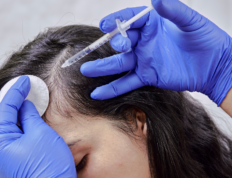
Hair loss is one of the most emotionally challenging conditions a person can face, affecting millions of men and women across South Africa. Whether it begins with a widening part, a receding hairline, or handfuls of hair in the shower drain, the experience can quietly erode confidence and self-image. The good news is that modern science has given us tools that go far beyond shampoos and supplements. Laser hair regrowth is one of the most clinically supported, non-invasive options available today — and understanding how it works can help you make an informed decision about your hair health.

What Is Low-Level Laser Therapy for Hair Loss
Low-level laser therapy, often abbreviated as LLLT, is a photobiomodulation treatment that uses specific wavelengths of red light to stimulate biological activity in the cells of the scalp. Unlike surgical lasers that cut or ablate tissue, low-level lasers operate at an intensity that penetrates the skin without causing heat damage. The light energy is absorbed by the mitochondria — the energy-producing structures inside cells — which then triggers a cascade of cellular responses that support hair follicle function and growth.
The treatment has a well-established body of clinical research behind it. Multiple peer-reviewed studies have demonstrated statistically significant increases in hair count and hair shaft diameter following consistent LLLT treatment. It is FDA cleared for both men and women, making it one of the few non-surgical hair therapies with that level of regulatory validation. At Hair Clinic International, this treatment is administered using the Theradome EVO LH40 and Pro LH80 devices — purpose-built laser helmets designed to deliver consistent, full-scalp coverage with medical-grade precision.
What makes low-level laser therapy particularly appealing is its accessibility and safety profile. There is no recovery time, no discomfort during treatment, and no risk of systemic side effects. Patients can use the Theradome helmet at home, meaning this is a hair loss treatment that fits into a daily routine without disrupting it. That said, results are most significant when LLLT is combined with other professional treatments under clinical supervision.
The Science Behind How Lasers Stimulate Hair Follicles
To understand why laser light can encourage hair growth, it helps to understand the hair growth cycle. Each hair follicle operates on a cycle consisting of three phases: anagen (active growth), catagen (transition), and telogen (resting/shedding). In individuals experiencing hair loss — particularly androgenetic alopecia — follicles spend progressively less time in the anagen phase and more time in the telogen phase. Over time, they also miniaturise, producing thinner, shorter hairs until they stop producing visible hair altogether.
Hair growth stimulation via low-level laser therapy works by addressing several of these mechanisms simultaneously. The red light photons (typically in the 630-670nm wavelength range) are absorbed by cytochrome c oxidase in the mitochondria of follicular cells. This absorption increases ATP (adenosine triphosphate) production — essentially giving the cells more energy to perform their functions. The result is an upregulation of cellular metabolism, increased protein synthesis, and improved blood flow to the scalp, all of which contribute to extending the anagen phase and stimulating dormant follicles.
LLLT has also been shown to reduce oxidative stress and inflammation in the scalp — two factors that are increasingly recognised as contributors to follicle damage and hair loss. By creating a more hospitable environment at the follicular level, laser therapy supports the conditions that healthy hair growth requires. This is not a quick fix; it is a biological reset that, with consistent application, yields measurable improvements in hair density and shaft quality over several months.
The Theradome Devices Used at Hair Clinic International
Hair Clinic International uses two flagship devices from Theradome: the EVO LH40 and the Pro LH80. These are not generic red-light panels or cosmetic-grade devices — they are purpose-engineered medical devices that deliver laser light (not LED) at the precise wavelengths and power densities required for clinical efficacy. This distinction matters, because many consumer-grade devices on the market use LEDs, which do not penetrate the scalp to the same depth as true laser diodes.
The Theradome EVO LH40 contains 40 laser diodes, making it a strong entry-level clinical device suitable for mild to moderate hair thinning. The Pro LH80 steps up to 80 diodes, providing broader scalp coverage and higher photon delivery per session — making it the preferred option for patients with more advanced hair loss or those seeking faster, more comprehensive results. Both devices are FDA cleared and ECM compliant, which aligns with Hair Clinic International’s commitment to offering only treatments that meet rigorous safety and efficacy standards.
Each Theradome session takes approximately 20 minutes and is designed for use two to four times per week, depending on the treatment protocol. The helmet design ensures that every zone of the scalp receives uniform laser exposure — a critical factor because uneven light distribution is one of the main shortcomings of handheld devices. When patients use these devices as part of a supervised hair regrowth therapy programme at a dedicated hair clinic South Africa like Hair Clinic International, outcomes are significantly better than self-directed home use without clinical guidance.
Who Is a Suitable Candidate for Laser Hair Treatment
Laser hair treatment is suitable for a broad range of patients, but it works best in specific contexts. Men and women experiencing androgenetic alopecia — the most common form of hair loss, driven by genetic sensitivity to dihydrotestosterone (DHT) — are strong candidates. LLLT is particularly effective in earlier stages of hair loss, when follicles are still present but miniaturised. The treatment can reactivate and strengthen these follicles before they become permanently dormant.
Women experiencing diffuse thinning — often related to hormonal changes, nutritional deficiencies, or postpartum hair loss — also respond well to laser treatment. Because the treatment is non-hormonal and non-invasive, it is safe for women who cannot or prefer not to use pharmaceutical options. It is equally suitable for men who want to avoid the side effects associated with certain hair loss medications.
Patients who are not ideal candidates include those with active scalp infections, open wounds on the scalp, or certain photosensitive skin conditions. A thorough consultation at Hair Clinic International will assess your specific pattern and cause of hair loss, your medical history, and your lifestyle to determine whether LLLT is appropriate as a standalone treatment or as part of a combined protocol.
What to Expect During and After Treatment
The experience of undergoing scalp therapy with a Theradome device is straightforward and comfortable. The helmet is placed on the head, and the device delivers its programmed session automatically. There is no heat, no vibration, and no discomfort — many patients describe it as simply sitting quietly for 20 minutes. The scalp may feel mildly stimulated or tingly in some cases, which is a normal response to increased blood flow in the area.
In the first few weeks of treatment, some patients notice an initial increase in shedding. This can be alarming if you are not expecting it, but it is a recognised part of the process — the follicles are being pushed out of the telogen (resting) phase and into a new anagen cycle, which first requires the old hair to shed. This is actually a sign that the treatment is working, and it typically resolves within four to six weeks as new growth begins to emerge.
Visible results generally begin to appear between three and six months of consistent use. Studies using phototrichogram analysis have shown average increases in hair count of 20-35% following 26 weeks of treatment with Theradome devices. Hair shaft diameter also increases, meaning individual hairs become thicker and more robust — which has a compounding effect on perceived density. Patients are encouraged to take baseline photos and track their progress at regular intervals, as improvements can be subtle at first but become clearly evident when compared over time.
How Laser Therapy Compares to Other Hair Restoration Options
Hair restoration is not a field with a single silver bullet. Different treatments address different mechanisms of hair loss, and the most effective outcomes typically come from combining approaches that work synergistically. Laser therapy occupies a unique position in this landscape because it works at the cellular level rather than through biochemical pathways, which means it complements treatments like PRP (platelet-rich plasma), mesotherapy, and carboxytherapy without conflict.
PRP therapy, for example, involves injecting concentrated growth factors from the patient’s own blood into the scalp to stimulate follicular regeneration. When combined with LLLT, the laser light can enhance the uptake and activity of these growth factors by increasing cellular metabolism in the treatment area. Similarly, mesotherapy — which delivers vitamins, minerals, and amino acids directly into the scalp — works more effectively when the follicular cells are in a heightened state of metabolic activity, which LLLT helps achieve.
Compared to surgical hair transplants, laser therapy is a non-invasive option for patients who are not ready for or do not need surgery. It will not recreate a hairline from scratch, but it can meaningfully slow progression, improve density in thinning areas, and maintain the results of a surgical transplant over the long term.
The Connection Between Scalp Health and Hair Growth
A healthy scalp is the foundation of healthy hair. The scalp is a complex biological environment that must maintain the right balance of oil, pH, blood supply, and microbial flora for hair follicles to function optimally. When this environment is disrupted — by excess DHT, inflammation, poor circulation, or nutritional imbalances — hair follicles begin to suffer even before visible thinning becomes apparent.
Scalp therapy with low-level laser light directly addresses one of the most critical factors in scalp health: blood microcirculation. The laser stimulates the production of nitric oxide, a vasodilator that causes blood vessels to relax and widen. This increases the flow of oxygen and nutrients to the follicle and improves the removal of metabolic waste products that can accumulate in the follicular environment. The net result is a scalp that is better nourished, less inflamed, and more supportive of active hair growth.
Beyond circulation, LLLT has been shown to modulate the activity of the 5-alpha reductase enzyme — the enzyme responsible for converting testosterone into DHT. Even a partial reduction in local DHT activity can meaningfully slow follicular miniaturisation, making laser therapy a valuable part of a thinning hair treatment strategy that addresses multiple pathways contributing to hair loss.
Combining Laser Treatment With Other Therapies at Hair Clinic International
One of the distinguishing qualities of Hair Clinic International is the breadth of treatments available under one roof. Patients have access to PRP therapy, mesotherapy, carboxytherapy, GF Complex Plus treatment, hormone therapy, surgical hair transplants, non-surgical hair replacement, and Klix hair extensions, all in addition to laser therapy. This allows clinicians to create genuinely comprehensive treatment plans.
A common combined protocol might pair Theradome laser sessions with monthly mesotherapy or PRP injections. The laser sessions maintain ongoing follicular stimulation between clinic visits, while the injectable treatments deliver concentrated biological signals that accelerate follicular regeneration. For patients with a hormonal component to their hair loss — particularly women experiencing thinning related to thyroid dysfunction, PCOS, or menopause — hormone therapy may also be incorporated to address the root cause rather than only the symptoms.
Hair regrowth therapy that is tailored to the individual produces meaningfully better outcomes than generic protocols. The clinical team at Hair Clinic International conducts thorough initial assessments that may include trichoscopy, scalp analysis, and blood panel review before making treatment recommendations. This diagnostic rigour ensures that every patient receives a protocol appropriate for their specific type and stage of hair loss.
Treatment Duration, Consistency, and Long-Term Maintenance
One of the most important things to understand about thinning hair treatment with laser therapy is that consistency is non-negotiable. The biological changes that LLLT induces are cumulative — each session builds on the last. Missing sessions or stopping treatment prematurely is the most common reason patients fail to see the results they expected.
The standard recommendation is to commit to at least six months of consistent use before evaluating results, followed by a maintenance phase of one to two sessions per week indefinitely. This reflects the fact that androgenetic alopecia is a progressive condition that, without ongoing intervention, will continue its natural course. Hair Clinic International provides patients with clear expectations and structured follow-up to support long-term adherence.
For many patients, the investment in a Theradome device for home use — combined with periodic in-clinic treatments — makes long-term maintenance both practical and affordable. The clinical team advises on the optimal home-use schedule and monitors progress at regular intervals to adjust the protocol as needed. This model of blended in-clinic and at-home laser hair regrowth therapy represents the current standard of care for sustainable, long-term hair retention.
Why Choose a Specialist Clinic Over a Generic Salon
The market for hair loss treatments in South Africa includes a wide spectrum of providers — from dedicated hair restoration clinics to general beauty salons that have added hair treatments to their menu. The difference in outcomes between these settings is significant and worth understanding before you invest time and money in any programme.
A specialist clinic like Hair Clinic International brings clinical expertise, medically validated devices, and diagnostic capability that generic salons simply cannot replicate. When you undergo hair restoration at a specialist centre, your treatment begins with a proper diagnosis of the type and cause of your hair loss. This matters because not all hair loss responds to the same treatment — laser therapy that produces excellent results in androgenetic alopecia may not be the primary treatment needed for alopecia areata or scarring alopecias.
Furthermore, the Theradome devices used at Hair Clinic International are true laser devices that meet FDA and ECM regulatory standards — not lower-powered LED imitations. The clinicians overseeing your treatment are trained to interpret your progress, identify complications early, and adjust your protocol when needed. Laser hair regrowth therapy is not a miracle, and it is not a quick fix — but it is real, clinically validated science that can make a meaningful difference for the right candidates. With the right guidance, the right devices, and a consistent commitment to the process, restoring and maintaining your hair is well within reach.