Female Pattern Hair Loss: Causes, Signs, and Treatment Options
Female pattern hair loss is one of the most common yet least talked-about conditions affecting women across South Africa and globally. While hair loss is often assumed to be a male issue, millions of women experience significant thinning and shedding at some point in their lives, and many do so without ever understanding what is causing it or what can be done. The good news is that effective treatments exist, and the earlier you seek an assessment, the better your chances of a meaningful outcome.
What Is Female Pattern Hair Loss?
Female pattern hair loss, known medically as female androgenetic alopecia, is a progressive condition in which hair gradually thins across the scalp. Unlike male pattern baldness, which typically presents as a receding hairline and bald patches, women tend to experience diffuse thinning across the top and crown of the scalp while the frontal hairline usually remains intact. The hair does not disappear all at once; instead, individual follicles shrink and produce finer, shorter strands over time until they stop producing visible hair altogether.
The condition affects women of all ages, though it becomes more common after menopause. Studies suggest that around 40% of women show some degree of female pattern hair loss by the age of 50. Despite how widespread it is, many women go years without receiving an accurate diagnosis because the thinning can be gradual and easy to attribute to other causes.
How Female Pattern Hair Loss Differs from Other Types
Not all hair loss is the same, and distinguishing female pattern hair loss from other conditions is important for choosing the right treatment. Alopecia areata, for example, presents as patchy round or oval areas of loss rather than diffuse thinning, and it is caused by an autoimmune response rather than hormonal sensitivity. Telogen effluvium causes sudden shedding usually triggered by a physical or emotional stressor, and it often resolves on its own once the trigger is removed.
Female androgenetic alopecia is progressive and permanent without treatment. It is caused by a sensitivity to androgens, specifically dihydrotestosterone (DHT), which gradually miniaturises hair follicles. This distinguishes it from temporary conditions and means that treatment needs to be ongoing to maintain results. A proper diagnosis from a specialist is the only way to confirm which type of hair loss you are dealing with.
What Causes Female Pattern Hair Loss?
The primary driver of female pattern hair loss is genetics. If your mother, grandmother, or other female relatives experienced significant hair thinning, your own risk is higher. The condition is polygenic, meaning multiple genes contribute to it, so you do not need a direct family history to develop it.
Hormonal changes play a significant role. The drop in oestrogen that occurs during perimenopause and menopause reduces the counterbalancing effect that oestrogen has on androgens, which can accelerate the progression of thinning in women who are genetically predisposed. Conditions such as polycystic ovary syndrome (PCOS), which elevate androgen levels, are also associated with earlier onset and more pronounced hair loss.
Other contributing factors include thyroid dysfunction, nutritional deficiencies (particularly iron and ferritin), chronic stress, and scalp conditions that affect follicle health. These do not cause androgenetic alopecia on their own, but they can worsen shedding in women who already have the genetic predisposition.
Recognising the Early Warning Signs
Catching female pattern hair loss early gives you the best opportunity to slow its progression. The most common early signs include a widening part line, increased scalp visibility at the crown, and a ponytail that feels noticeably thinner than it used to. Many women also notice more hair than usual on their pillow, in the shower drain, or on their hairbrush, although some daily shedding is normal.
Miniaturised hairs, which are shorter and finer than regular strands, are a hallmark sign of androgenetic alopecia. If you look closely at your hairline or part line and notice hairs that are noticeably thinner and less pigmented than the rest, this is worth discussing with a specialist. Early trichoscopy, a non-invasive magnification technique used to examine the scalp and follicles, can detect miniaturisation before it becomes visually obvious.
How Female Pattern Hair Loss Is Diagnosed
A proper diagnosis involves more than just looking at the scalp. At Hair Clinic International, a trichologist or hair specialist will take a detailed history covering your family history, hormonal status, nutritional intake, medications, and how the loss has progressed. A physical examination of the scalp and hair density, combined with trichoscopy, provides a clear picture of what is happening at the follicle level.
Blood tests are often recommended to rule out or identify contributing factors such as low ferritin, thyroid abnormalities, or elevated androgen levels. In some cases, a scalp biopsy may be taken to confirm the diagnosis if there is uncertainty. The more thorough the diagnostic process, the more targeted and effective the treatment plan can be.
Non-Surgical Treatment Options
Several effective non-surgical treatments are available for women with hair loss. Minoxidil, applied topically to the scalp, is one of the most established options and works by prolonging the growth phase of the hair cycle and improving blood flow to the follicles. It does not address the underlying hormonal cause but can meaningfully slow progression and increase hair density with consistent use.
Anti-androgen medications such as spironolactone or finasteride (used off-label in post-menopausal women) work by blocking the effect of DHT on hair follicles. These are prescription medications and require medical supervision, but they can be highly effective for women whose loss is driven by androgen sensitivity. Low-level laser therapy (LLLT) is another non-invasive option with growing evidence for stimulating follicle activity and improving hair density.
PRP Therapy for Female Pattern Hair Loss
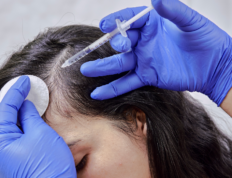
Platelet-rich plasma (PRP) therapy has become an increasingly popular treatment for female androgenetic alopecia. The procedure involves drawing a small amount of the patient’s blood, concentrating it to extract growth factor-rich plasma, and injecting it into the scalp. The growth factors signal dormant or weakened follicles to re-enter the growth phase and produce thicker, healthier strands.
PRP therapy is typically performed as a course of three to four sessions spaced four to six weeks apart, followed by maintenance sessions every few months. Results are gradual and build over time, with most patients noticing improved density and reduced shedding after the initial course. PRP is often combined with other treatments such as minoxidil or low-level laser therapy for enhanced outcomes.
Hair Transplant Surgery for Women
Hair transplant surgery is a viable option for a specific subset of women with female pattern hair loss, particularly those who have stable, well-defined areas of thinning and a sufficient donor supply. The procedure involves harvesting healthy follicle units from the back or sides of the scalp and transplanting them to the thinning areas.
Not all women are good candidates for transplant surgery, which is why a thorough assessment is essential before considering this route. Women with diffuse thinning across the entire scalp may not have a reliably unaffected donor area, which limits the effectiveness of the procedure. A specialist at Hair Clinic International can assess whether surgery is appropriate based on your specific pattern of loss and donor availability.
Lifestyle Factors That Support Hair Health
Treatment works best when it is supported by healthy lifestyle habits. Nutritional status has a direct impact on hair growth, with deficiencies in iron, ferritin, zinc, vitamin D, and B vitamins all associated with increased shedding. If blood tests reveal deficiencies, addressing them through diet or supplementation can meaningfully improve the response to medical treatment.
Chronic stress elevates cortisol levels, which can disrupt the hair cycle and contribute to increased shedding. Managing stress through regular exercise, adequate sleep, and mindfulness practices is not a substitute for medical treatment, but it supports overall scalp and hair health. Avoid tight hairstyles, excessive heat styling, and chemical treatments that place mechanical stress on already fragile hair.
When to Seek Specialist Help
Many women delay seeking help because hair loss carries stigma or because they hope the thinning will resolve on its own. With female pattern hair loss, waiting rarely helps. The condition is progressive, and follicles that are miniaturised for long enough will eventually stop producing hair permanently. The window for effective intervention is real, and earlier action consistently produces better outcomes.
If you have noticed your part widening, your ponytail thinning, or more hair than usual coming out in the shower, book an assessment rather than wait. At Hair Clinic International, a specialist will assess your scalp, identify the cause of your loss, and build a treatment plan specific to your condition and goals. You do not need to manage this alone, and you do not need to accept hair loss as inevitable.